How to Read a Ferry Timetable: A Simple Guide to Sailings, Check-in and Boarding
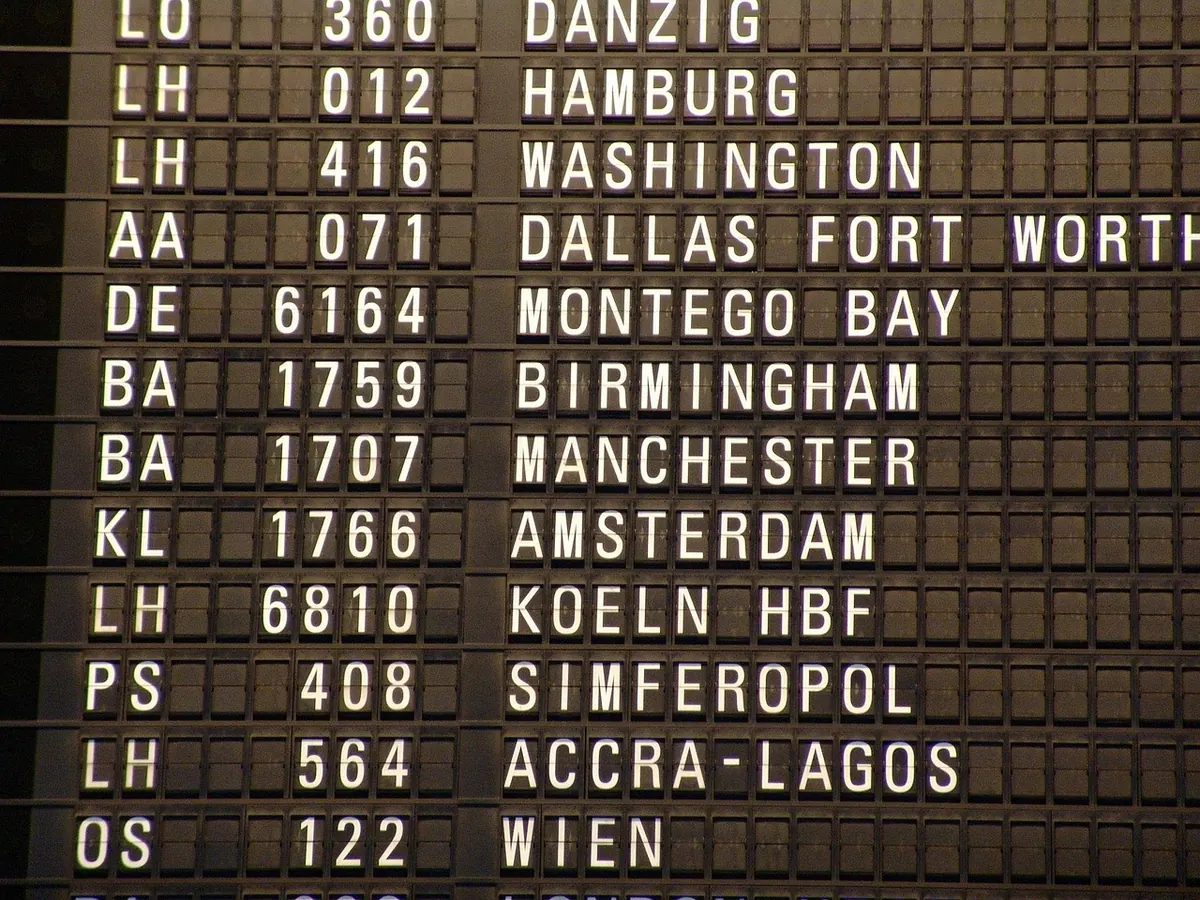
A ferry timetable looks like the simplest document in travel: two columns of times, a handful of symbols, and a footnote in type too small to read on a phone. It is also where a lot of ferry journeys go wrong — not because the sailing was cancelled, but because someone misread a dagger, or arrived forty minutes before departure when the operator wanted an hour.
Reading a timetable properly takes about five minutes. Here is what to look at, in the order that matters.
Start with the two numbers that matter
Every sailing has two times, and they are not equally important. The departure time is the one printed in bold. The time you actually need is the check-in deadline, which usually lives in the booking conditions rather than the timetable itself.
A 14:30 crossing on a busy short-sea route and a 14:30 crossing to a Scottish island can have very different rules. One may want you at the port an hour before; the other may be happy with twenty minutes. The timetable tells you when the ship leaves. The operator tells you when to turn up.
Write both down: leave home 11:00, check in by 13:30, sail 14:30. Two of those three numbers are yours to control.
Decoding the symbols and footnotes
Symbols are where timetables get cryptic, and they vary from one operator to the next. The same dagger that means "Mondays to Fridays only" on one route might mean "not 25 December" on another. Never guess — find the key, usually at the foot of the page or behind a "notes" tab.
Some you will meet again and again:
- Day letters — M, Tu, W, Th, F, Sa, Su, or a row of single letters above the times.
- A dagger, asterisk or superscript number — a conditional sailing, explained in the footnote. Could be school holidays only; could be one specific date.
- A dash, an X or a blank cell — no sailing. A blank usually means the same as a dash, but check, because occasionally it means "call to confirm".
- A and D — arrival and departure, used where a port appears twice in one journey.
- Via — the ship calls at an intermediate port. Your crossing is longer, and you may not be allowed ashore.
- Season markers — summer, winter or "low season" columns, often printed as separate tables entirely.
Read the footnotes before you read the times. If a sailing carries three symbols, that is your answer: it does not run every day, and not always at that hour.
Times, clocks and crossing durations
Most operators print times on the 24-hour clock, so 07:15 and 19:15 cannot be confused. Where a timetable uses am and pm, take an extra second — a 12:30 am sailing is the middle of the night, not lunch.
All times are local. That sounds obvious until you book a route where the two ports sit in different countries with different clocks. On most short crossings it never comes up; on longer ones it can. If the timetable prints a note about local time, believe it and set your watch accordingly.
Then look at the duration column. Crossing times are estimates, not promises. Weather, tides, harbour traffic and the ship herself all move the arrival time, and a schedule that says 1h 30m can comfortably take two hours in a swell. Build a cushion, particularly if a train or a flight follows.
Check-in cut-offs by traveller type
This is where the timetable meets the small print. Cut-offs vary by operator, port and season, so treat these as typical starting points and confirm yours when you book.
- Foot passengers — often the shortest window, commonly 15 to 30 minutes before departure, though some ports ask for longer because of terminal walking distances or shuttle buses.
- Cars and motorcycles — usually 30 to 60 minutes, with longer windows at big ports and at peak times.
- Motorhomes, caravans and vehicles with trailers — often the same as cars, sometimes longer because of lane loading and height checks.
- Cycles — usually treated like foot passengers, but some operators load bikes with the vehicles, so ask.
- Groups and coaches — booked separately, with their own reporting times.
Check-in closes when it closes. Reaching the booth at the cut-off minute is not the same as being through it. If your booking is flexible, some operators will move you to a later sailing; if it is not, you may be buying a new ticket. That difference is worth checking before you choose a fare, not after.
Boarding, last call and missed sailings
Check-in and boarding are two different things. Check-in gets you into the port and into a lane. Boarding is when the ship actually takes you, and it happens in stages: foot passengers first or last depending on the port, cars by lane, freight around everything else.
Once boarding starts, the departure is fixed. If you are sitting in the terminal with a coffee, listen for the announcement, and do not read a delayed boarding call as a delayed sailing. Ships often close their doors several minutes before the published departure time.
If you do miss it, go straight to the operator's desk rather than joining a queue. Staff can tell you what the next available sailing is, whether there is space and what it will cost. Asking early and calmly beats working it out in the car park.
Why the timetable changes: seasons, tides and refits
The timetable you saved in March may not be the one running in July. Seasonal schedules are normal: more sailings in summer, fewer in winter, and different days of the week entirely in the shoulder months. Ships also go in for refit, which takes a vessel off the route and can cut frequencies for weeks.
Tidal ports and small island routes vary most. Some sailings depend on water depth or on a linkspan being usable at a particular state of the tide, which is why a timetable may show two different crossing times for the same route on the same day.
Before any trip, check the live timetable on the operator's site rather than a screenshot, and check your booking confirmation as well. If the two disagree, the confirmation is the one that applies to you — or a quick phone call will settle it.
A five-minute check before you travel
Run through this the day before, and again on the morning:
- Confirm the sailing time and the check-in deadline from your booking, not from memory.
- Note whether the times are local, and whether a time zone change is involved.
- Add half an hour to your drive for traffic, roadworks and the last mile into the port.
- Check the operator's travel updates for weather, refits or timetable changes.
- Have your booking reference and ID to hand, not buried in an email.
- Look at the arrival time, then at whatever transport follows. If the gap is under an hour, have a plan B.
Ferries are refreshingly unhurried compared with airports, but they still run to rules. Learn the two times that matter, read the footnotes properly, and the rest of the journey tends to take care of itself.
Photo: Peggy_Marco / Pixabay