Why Do Ferries Get Cancelled? Weather, Tides and Your Rights in the UK
Few announcements take the shine off a trip faster than the one that begins with an apology. From the queue at the terminal, ferry cancellations can look random. They rarely are. Wind, tide, a mechanical fault or a delay earlier in the day will account for almost every one of them, and knowing which is behind yours tells you roughly how long you'll be waiting and what you can reasonably ask for.
The short answer: why a sailing gets pulled
Cancellations fall into a few familiar categories, and they behave very differently.
- Weather. Wind, swell, fog and, in winter, ice. By far the biggest cause on exposed routes and at exposed berths.
- Tides and water levels. Some ports can only be worked around high water, or when there is enough depth over a sill.
- Technical faults. A ship with a problem does not sail, and there is rarely a spare vessel waiting in the next berth.
- Port and berth problems. A closed harbour entrance, a damaged linkspan, a berth blocked by another ship.
- Knock-on delays. Ferry schedules are tight. One late arrival can leave the ship out of position for the rest of the day.
- Crew and industrial issues. Less common, but a shortage of qualified crew or strike action can ground a sailing at short notice.
The reason matters. Weather and tides are treated as outside the operator's control; a broken engine usually is not. That single distinction shapes everything that follows.
Weather: what actually stops a ferry
Wind is the usual culprit, and not in the way most people expect. A ferry can often cross comfortably in conditions that make it impossible to berth. Strong winds blowing across a narrow harbour entrance, or pushing a ship sideways off the berth, turn a routine arrival into a decision only the master can make.
That is why a sailing can be cancelled after you have already driven onto the linkspan, or after boarding has begun. It is also why a bright, still morning at home tells you very little: the wind at the berth, and the swell out in the channel, are what count. Long swells arriving from a distant storm can make a berth unusable on an otherwise pleasant day.
Fog closes ports as effectively as wind. Visibility limits and harbour movements can stop sailings outright, then lift as suddenly as they arrived. Snow and ice bring their own problems, from ungritted terminal ramps to vehicles that cannot load safely.
So skip the weather app for your postcode. Check the operator's service status page, look at wind direction as well as speed, and take a look at the forecast for the port rather than the town.
Tides: the timetable you never see
Tides run roughly fifty minutes later each day, and the range between spring and neap tides changes constantly. At most large ports that hardly matters. At harbours with a lock, a sill, a shallow approach channel or a linkspan that needs a certain height of water, it is everything.
On tide-restricted routes, operators publish amended timetables months ahead, and a crossing that runs at 08:10 in April might run at 09:00 in July. Occasionally a sailing is dropped altogether because it cannot be squeezed into the window when there is enough water. Unusually high or low air pressure, or a storm surge, can shift water levels enough to affect a sailing too.
If your route is tide-dependent, always check the timetable for your specific date rather than the general one on the website. It is not a design flaw in the port; it is simply the sea doing what it does.
Rebooking, refunds and what you're entitled to
The sea passenger rights rules that apply to services leaving UK ports give you a genuine choice when a sailing is cancelled: a refund of the ticket, or a place on the next available crossing. Many operators go further and will move you to a different route or a different day at no cost. Ask what they can do rather than arguing about what they must do — you will usually get further.
Where disruption leaves you waiting a long time, the rules also envisage practical help: refreshments in proportion to the wait, and somewhere to stay if you are stranded overnight, within limits. When the cause is weather that makes sailing unsafe, an operator's obligations can be reduced, but information is not optional — you should be told what has happened and what your options are as soon as possible.
Two caveats. Not every service is covered: very small operators and some unusual routes sit outside the scheme, and a ferry you board outside the UK is governed by the rules of that country (though the operator is still your first point of contact). And if your crossing was part of a package holiday, the package travel rules add another layer of protection. This is general guidance rather than legal advice, so read the operator's conditions of carriage, which are usually short and clear.
Compensation: when it's due, and when weather rules it out
Long delays can trigger compensation, typically a percentage of the fare, depending on how long the journey was scheduled to take and how late you arrive. The weather exemption, however, is wide, and it catches most ferry passengers. A gale that prevents a ship berthing is not the operator's fault, and no amount of complaining will turn it into a payout.
A technical fault is a different matter. If a sailing is cancelled because of something within the company's control — a breakdown, a staffing failure — your case is much stronger.
If you think you are owed something, put it in writing to the operator. Include your booking reference, the date, the sailing, what happened and what you are asking for. Attach receipts and a copy of any cancellation notice. Responses usually take a few weeks. If you get nowhere, the national enforcement body for passenger rights can look at the complaint.
Keep in mind that compensation is separate from travel insurance. Check whether your policy covers missed connections and extra nights away, because many exclude disruption caused by weather that was already forecast when you booked.
Practical steps before and on the day
- Build in slack. If the crossing really matters, book one earlier than you strictly need, especially between October and March.
- Watch the service status page. Check it 24 hours before and again on the morning of travel, not just as you leave the house.
- Turn on alerts. Text or email notifications are usually the quickest way to hear about an amended sailing.
- Know your alternatives. A nearby route, the Tunnel, or a different departure day. Decide now, not in a queue.
- Talk to the desk, not just the phone. If you are already at the port, staff there can often rebook you on the spot while the call centre is jammed.
- Get the reason in writing. A cancellation notice or an email stating the cause helps with both insurance and any later claim.
- Keep every receipt for meals, taxis and hotels, and photograph the departures board.
- Be decent to the staff. They did not order the wind, and they are the people who can find you a space on the next sailing.
A calm plan beats a perfect forecast
You cannot argue with a gale, and a ferry is not a train: there is no next service in twenty minutes, and the decision to sail rests with the master, who will not be rushed. What you can control is how much slack you leave in your plans, how early you hear about a change, and how well you keep your paperwork.
Book flexible fares when your plans are tight, keep the operator's app and your booking reference to hand, and set aside a little of your journey time as insurance. Do that, and a cancelled sailing becomes an inconvenience rather than a crisis.
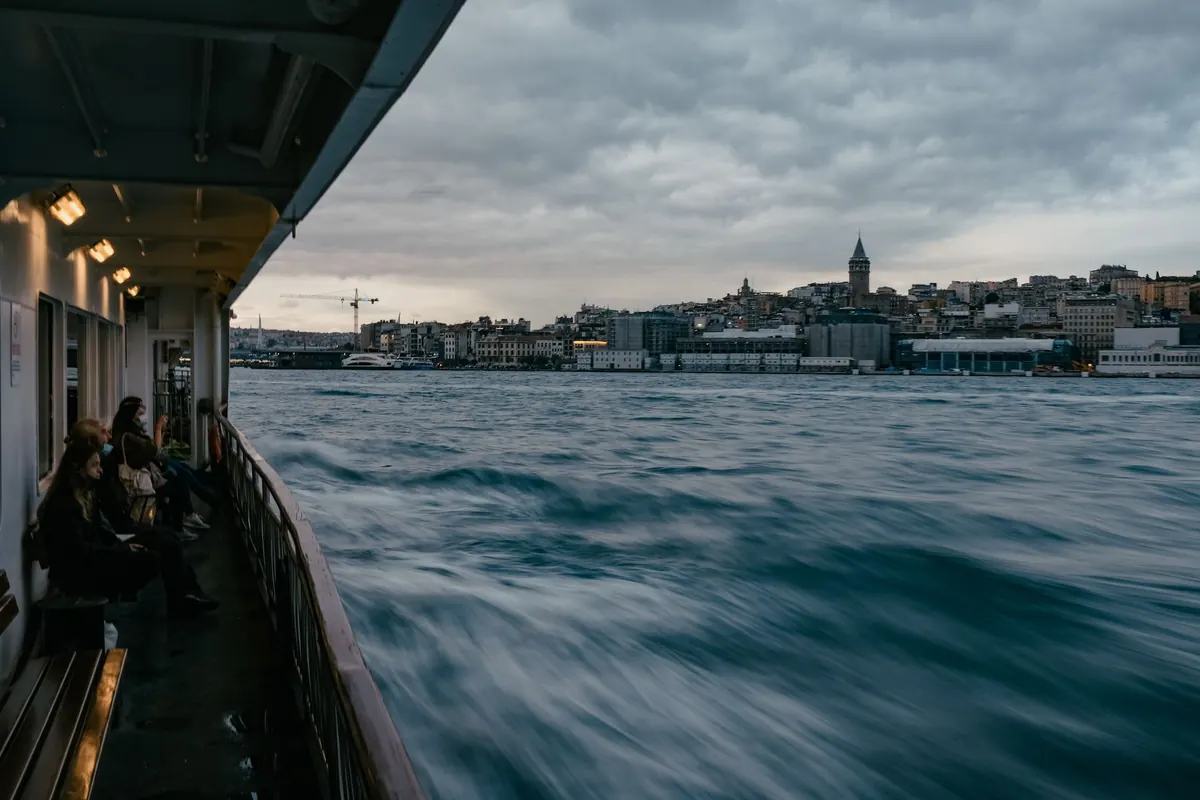
Photo: Oğuz Kandemir / Pexels